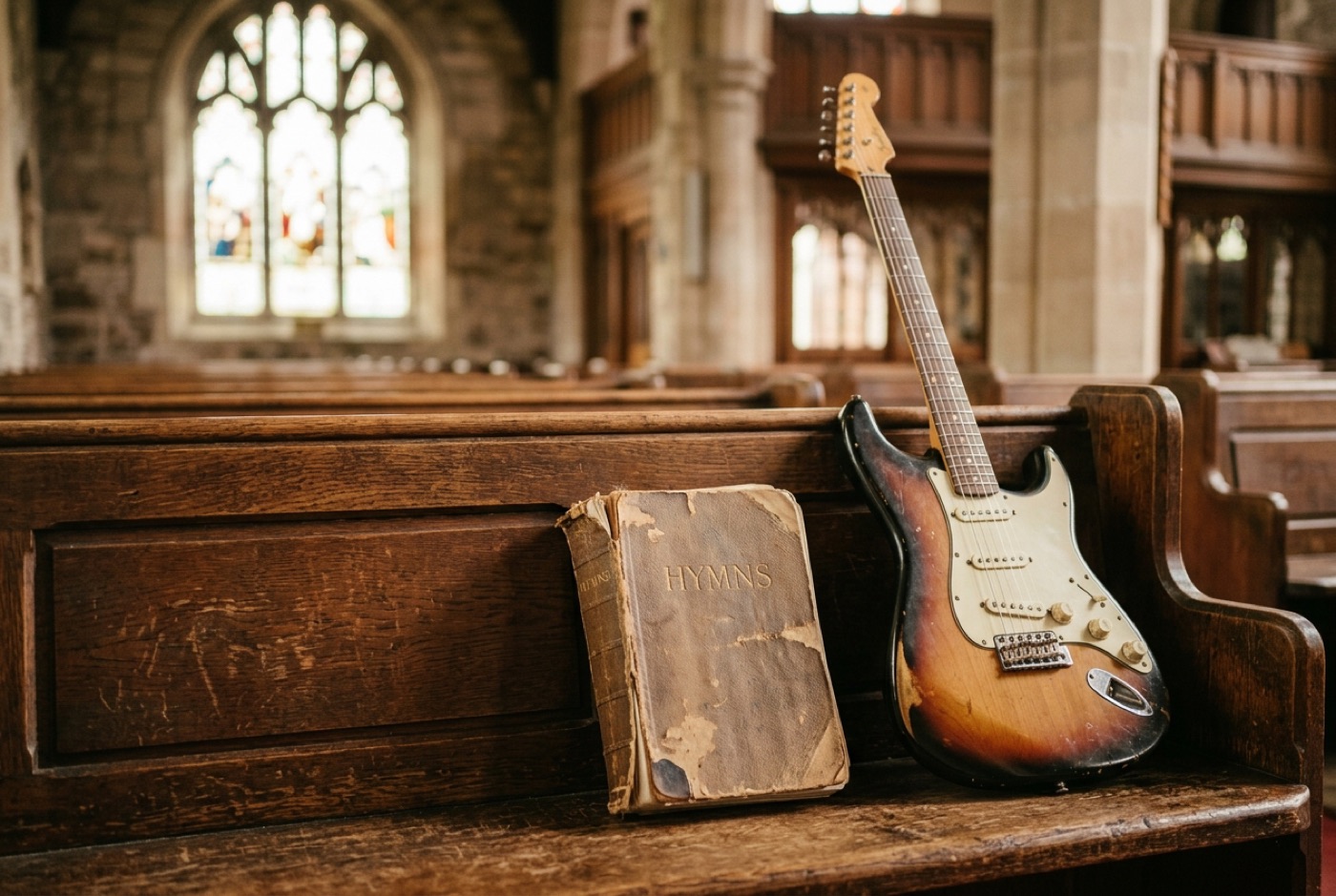
Somewhere along the way, a lot of us started believing that style is the thing standing between our church and health. If we just updated the music. If we just got the lights right. Or — from the other direction — if we just got back to hymns and reverence, the drift would stop. I've pastored for thirty years, and I want to say this as plainly as I can: style has never made a church healthy, and style has never made one sick.
Modern or traditional. Full band or a piano and a hymnal. Pews or chairs, suits or jeans, liturgy or spontaneity. There is room for every one of those churches, because none of those things is the driving factor of church health. I've seen dying churches with incredible production and thriving churches that haven't changed a song in forty years — and vice versa. Style is a costume. The body underneath is what's healthy or not.
The two questions that actually determine health
A church gets healthy when it can answer two questions:
1. What is a disciple? Not a dictionary answer — a description so concrete you'd recognize one in the hallway. What does a person look like after five years in your church? What do they do when pressure hits? How do they handle their money, their marriage, their neighbor? If your leadership team wrote their answers down separately, would they match?
2. What is our system for building one? A repeatable path a real person can actually walk — from the back row, into relationships, into serving, into leading, into a life that looks like Jesus. Not a program you ran once. A path that's still there next year.
Get those two right, and any style works. Miss them, and no style will save you.
Build the avatar
Businesses obsess over the customer they're trying to reach. I'd argue a church needs something like it, aimed the opposite direction — not who we're trying to attract, but who we're trying to build. Call it the disciple avatar: a written, specific, honest picture of the person your church is trying to form.
Sit down with your leaders and describe that person on one page. They pray like this. They serve like this. They handle conflict like this. They give like this. They can share their faith without panic. They're forming somebody else. Be specific enough that it costs something.
Two things happen the moment that page exists. First, every ministry can be measured against it — not "did people come," but "is this producing that person." Second, arguments about style quietly deflate, because the question is no longer what do we prefer but what does this produce. A hymn and a light rig are both just tools. Tools don't have loyalty. Missions do.
Why the style fight is so tempting
Because it's visible. You can change the music in a month. You can paint the lobby in a weekend. Defining a disciple and building the path takes years, and most of the work is invisible. So we reach for the lever we can see — and mistake motion for progress.
Here's the tell: a church that has answered the two questions can tell you stories. Not attendance numbers — stories. "This man came in a wreck two years ago; last month he led his first group." A church that hasn't answered them can only tell you about the style change, because that's the only thing that happened.
For the church that feels behind
If you're the pastor of seventy people in a building that hasn't changed since 1988, hear this: you are not behind. Nearly nine in ten churches in America are 250 people or fewer. The megachurch on the screen is the exception, and its style is not why it grew. You don't need their lights. You need your church to be able to say what a disciple is and how you build one — and a church of seventy can do that better than a church of seven thousand, because nobody gets lost in a crowd of seventy.
Keep the hymnals. Or keep the band. Either way, answer the two questions.
Want to see where your church actually stands on the path — not the style? Take the free Church Vitality Check. Three minutes, no account, an honest read.