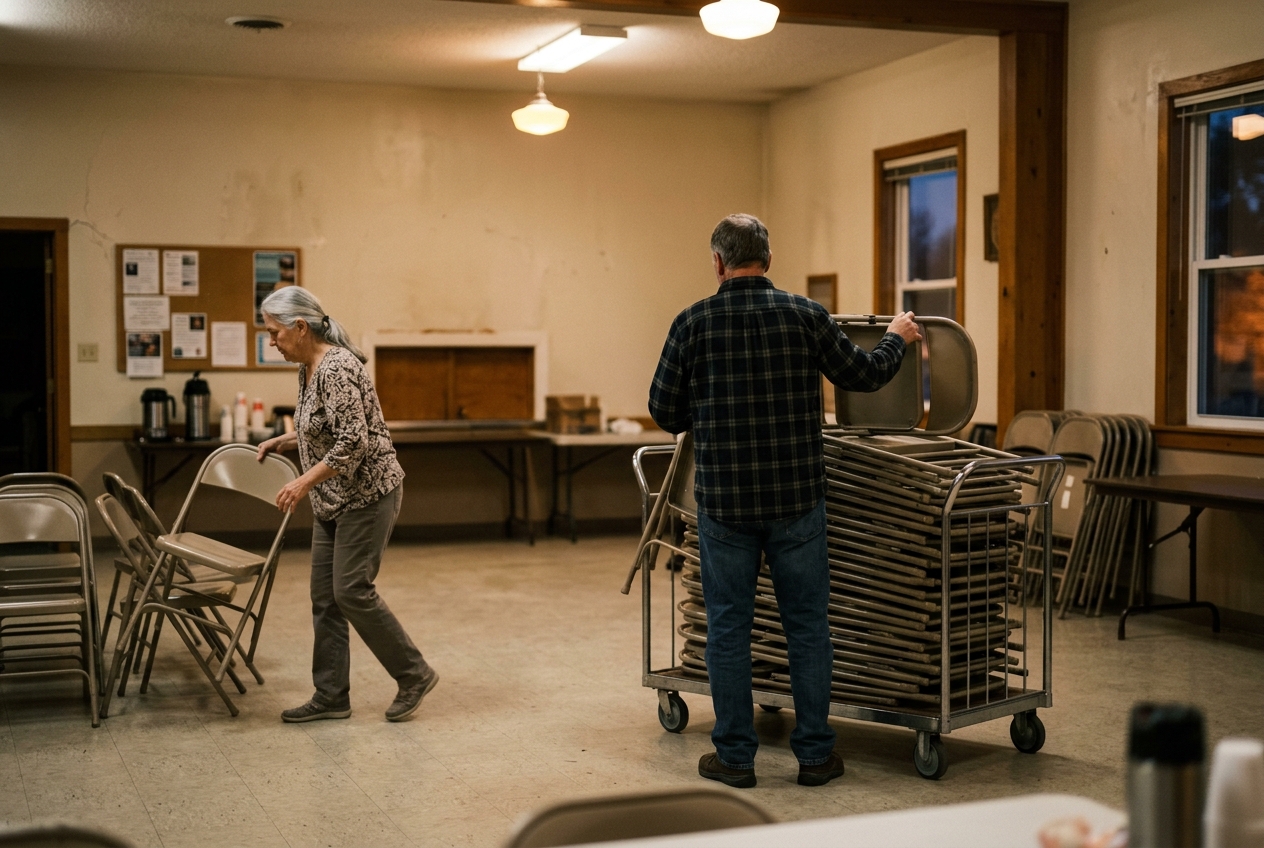
There's a woman in our church — I'll call her Carol — who attended for six years before anyone asked her to do anything. Six years. When I finally asked her to help with our older folks, because I'd watched how she was with them, she said yes before I finished the sentence. Then she said something that stung: "I always wondered why nobody ever asked."
Six years of Sundays, sitting eight rows back, wondering why nobody ever asked. And for six years we'd have described Carol as someone who "hadn't stepped up yet."
The lie: "people will step up when they're ready"
This one flatters everybody, which is why it survives. It flatters the church — we're patient, we don't pressure people. It flatters our theology — the Spirit will move them. And it quietly makes the waiting their fault: the ready ones step up, so the ones who haven't must not be ready.
Except that's not how belonging works anywhere else, and we all know it. Nobody moves from guest to family at a dinner party by volunteering to do the dishes uninvited. The host hands them the towel — here, you're one of us now — and the towel is the welcome. Serving isn't what people do after they belong. Being asked to serve is how most people find out they belong.
So the folks "not stepping up" in your church aren't unready. Most of them are Carol: waiting for evidence that anybody wants them specifically, and reading six years of silence the same way the drifting family reads two unnoticed absences. As a verdict.
Why the sign-up sheet fails — and the early ask fails too
Small churches typically make one of two mistakes here, and they look like opposites but they're the same mistake: an impersonal ask.
The first is the clipboard. The announcement from the front, the table in the lobby, the line on the connect card. Sign-up sheets harvest people who were already going to serve — your faithful fifteen, signing up for their fourth thing. They have never once, in the history of clipboards, converted a spectator into family, because a blank line asks for labor. It says we need hands. It cannot say we need you, and everybody reading it knows the difference in their gut.
The second mistake is asking too early. A guest on their first visit gets handed a volunteer form, and what should feel like welcome feels like recruitment — we've known you for forty minutes and we've already got you scheduled. The timing tells the truth: it was never about them. If your church tends to do this one, it's usually because the serving roster is bleeding, which is its own conversation — Volunteers Are the Point is where I've made that case.
What the right ask sounds like
The ask that moves someone from attending your church to carrying it has three parts, and none of them can be printed on a clipboard.
It's personal — one person, face to face, using their name. It's specific — a real role with edges, not "we can always use help." And it's evidentiary. That's the part almost everyone skips. The right ask proves somebody has been paying attention: "Carol, I've watched how you are with our older folks. The way you sat with Miss Ruth last month — that's a gift, and I need it on our care team."
Hear what that sentence does. Before it asks for anything, it tells her she's been seen. The ask is almost secondary; the seeing is the gift. That's why the answer is nearly always yes — and why yes to that question does something a hundred attended Sundays never quite did. The day Carol took her first care assignment was the day this stopped being the church she attends and became her church. People don't attend their way into family. They get handed the towel.
Making the seeing systematic
Here's the tension, though. That ask requires knowing people — their wiring, their gifts, what you've watched them do. In a church of sixty, the pastor can hold that in his head. Past about a hundred and fifty, "I've been watching you" becomes a thing only the extroverts and the up-front people ever hear, and the Carols sit for six years.
So we're building the seeing into the system the same way we built the noticing: gifts and wiring surveyed on purpose, matched to real roles with real job descriptions, so that when a leader makes the personal ask, it's loaded with actual knowledge instead of vibes. The ask stays human — it has to be a person, with a name, across a table. The homework underneath it is what we're putting on rails.
That's promise four. The whole map — welcome, connection, belonging, family, and the lie sitting on each one — is in The Four Lies Keeping Your Church Small. If you only fix one this fall, fix whichever one your gut flinched at.
Who's been waiting six years for you to ask?
Take the free church check and see where your four promises actually stand — or grab fifteen minutes and let's talk about the Carols in your congregation.