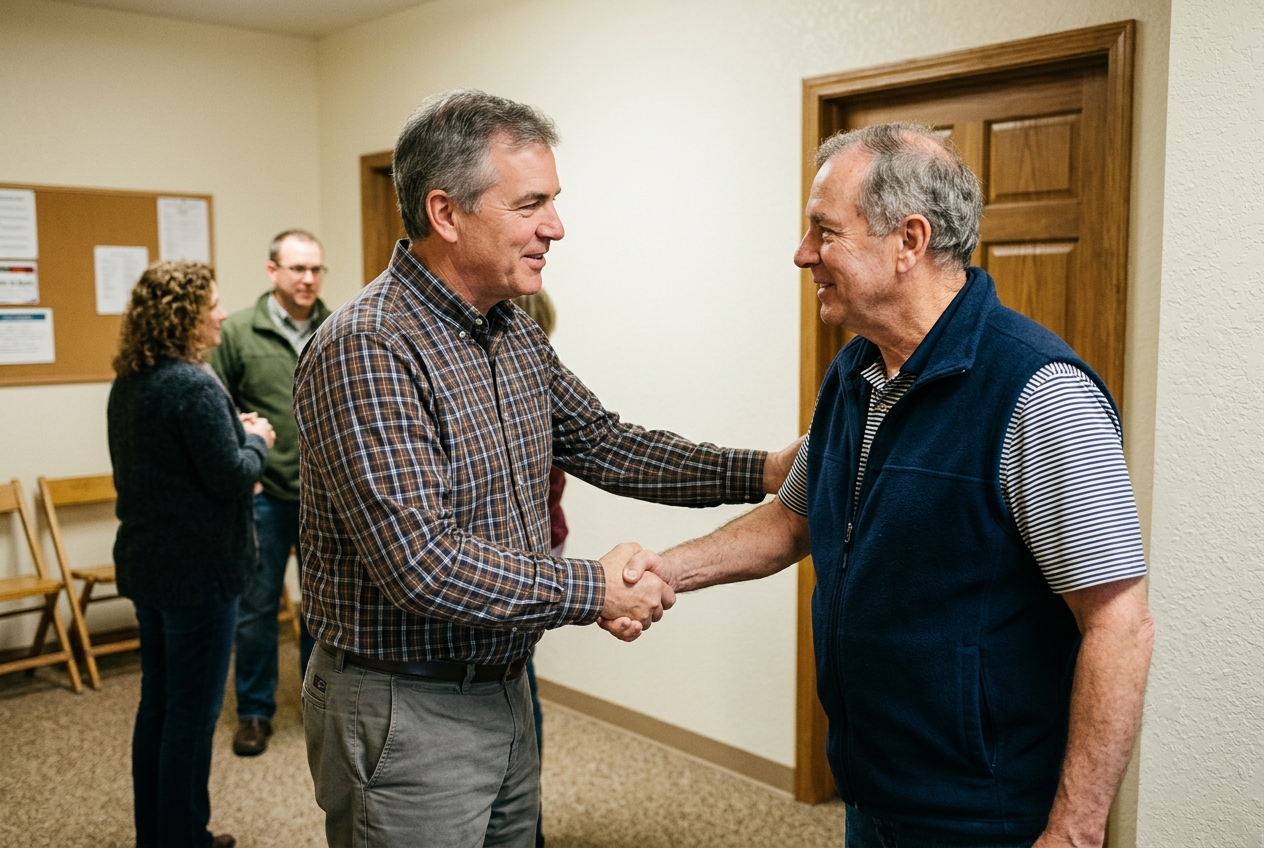
There's a moment I've watched play out in my own lobby more times than I want to admit. A guest comes back for her third Sunday. Somebody warm and well-meaning walks up, smiles big, and says: "Good to see you again!" No name. There was no name the second week either. And she smiles back, because she's polite, and she hears the sentence underneath the sentence: we don't actually know you.
"Good to see you" without a name, three weeks running, is not a greeting. It's a confession.
A contact is not a connection
In most small churches, exactly one person reliably learns a guest's name: the pastor. And we're good at it — it's the job, we've had practice, we've got the little tricks. So the guest gets known by one professional and mistaken-for-familiar by everyone else, and we call that "getting connected."
But being known by the pastor is a contact. It's what you'd get from a good salesman or a good dentist. Connection is when the church knows you — when you walk in the third Sunday and somebody who isn't paid to remember you says "Rachel! How'd the week go?" Nobody joins a church because the pastor knows their name. The pastor knowing your name is table stakes. People stay when the fourth person learns it.
Here's the sentence I make myself say out loud: if only the pastor knows their name, the church doesn't know their name.
The lie underneath: "everybody knows everybody here"
Small churches say this with real pride, and inside the long-timers' circle it's true — everybody who's been there five years knows everybody who's been there five years. That's precisely what makes it a trap. Because the sentence feels so true from the inside, nobody notices it's flatly false for the new family in row six, who after two months can name the pastor, the pastor's wife, and possibly the drummer.
The feeling of "everybody knows everybody" is the strongest evidence that no system exists to make it true for anyone new. Warm churches coast on that feeling the longest.
The three-mouths rule
So here's the discipline we adopted, and it's blunt on purpose: every guest's name gets passed to at least three people before the next Sunday. Not "shared if it comes up." Passed, deliberately, like a baton.
In practice it looks like this. Whoever meets a guest doesn't finish the conversation solo — they walk the guest to someone else and make the introduction by name, out loud, both directions. That's mouth two, and it happens before anybody's car leaves the lot. Then sometime that week, mouths two and three get the name on purpose: whoever's doing the follow-up touch, and whoever will be looking for that family at the door next Sunday. Different people, on purpose — because a name that lives in one head leaves in one car.
The magic isn't the number three. The magic is that it's assigned. The name moves because moving it is somebody's job, the same way the welcome worked once we gave it zones and names. Memory is a lovely thing and a terrible system.
What it does to a second visit
Walk it forward. A family visits. That week, three different people from your church have touched their world — a text from the person they met, maybe a card in the mail from someone else, and a face at the door who was watching for them by name. Sunday two doesn't feel like a second audition. It feels like coming back to a place that noticed.
We built this rhythm into how our guest follow-up runs — the same-day text comes from one person, the handwritten card from a second, the midweek invite from a third. Three touches, three different names, one week. Nobody heroic, nothing left to whoever happens to remember. The pattern matters more than the tools, but if you want the tools too, that's what GuestPilot automates for us.
This is promise two of four — the whole map is in The Four Lies Keeping Your Church Small. Promise three is where it gets painful, because it's about the people who already stopped coming: They Left in Week Two. You Called in Week Six.
Three names in three mouths, every week, on rails.
GuestPilot routes each guest's week-one touches to different people on your team automatically — the name spreads because the system passes it, not because somebody remembered to.